"A picture is worth a thousand words"
Monday, May 14, 2007
Labels: i love life, lebanon, photos
posted by Angry Anarchist @ 5/14/2007 10:54:00 PM,
,


The Studio
Sunday, May 6, 2007

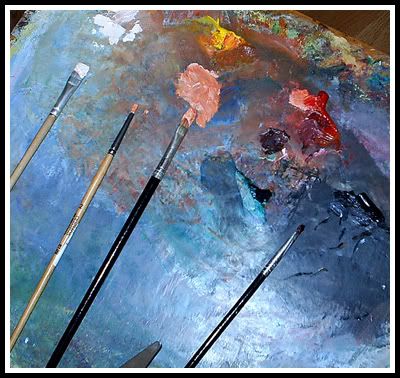
The brush jar...
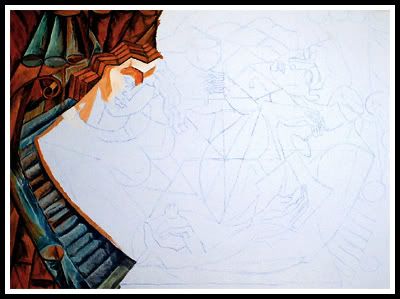
the canvas...
(Re-producing Yuroz's "Before Sunset", with some variations)
posted by Angry Anarchist @ 5/06/2007 11:36:00 AM,
,
April 29 ODEO Special
Sunday, April 29, 2007
to all the pro-WSF/WSFers out there. ;)
Hopefully one day, you will get the hint.
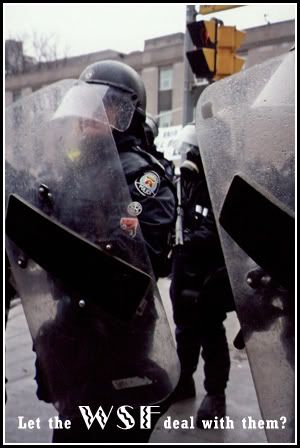
(and you're a spineless liberal)
Labels: anarchism, class struggle, music, photos
posted by Angry Anarchist @ 4/29/2007 11:43:00 AM,
,
Photo Thursday
Thursday, April 26, 2007
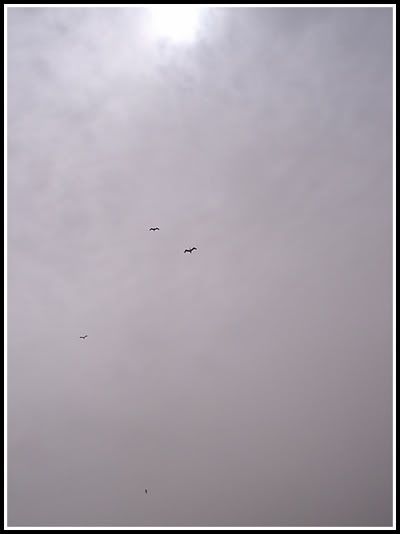
Light passes through me lightless, sound soundless,
smoking nowhere, groaning with sudden birds. Paper
dies, flesh melts, leaving stockings and their useless vanity
in graves, bodies lie still across foolish borders.
I'm going my way, going my way gleaning shade, burnt
meridians, dropping carets, flung latitudes, inattention,
screeching looks. I'm trying to put my tongue on dawns
now, I'm busy licking dusk away, tracking deep twittering
silences. You come to this, here's the morrow of it, not
moving, not standing, it's too much to hold up, what I
really want to say is, I don't want no fucking country, here
or there and all the way back, I don't like it, none of it,
easy as that. I'm giving up on land to light on, and why not,
I can't perfect my own shadow, my violent sorrow, my
individual wrists.
Dionne Brand - Land to Light On
posted by Angry Anarchist @ 4/26/2007 01:32:00 PM,
,
Photo Thursday
Thursday, April 19, 2007
 St. George hotel & yacht club
أنا أعتقد أن قول الحقيقة وتسمية الاشياء بأسمائها، أهم من الإمساك بالعصا من النصف، ولذلك كنت أول من أطلق على اعتصام المعارضة في الساحتين اسم «احتلال» لان الصفة القانونية لاستعمال أملاك الغير هي «احتلال».ا
I think that telling the truth and calling things by their name is more important than holding the stick in the middle, and this is why I was the first to have labeled the opposition sit-in in the two squares as "occupation", because the legal term for using the properties of others is "occupation."Can you guess who said this? The first to guess correctly will receive a generous reward.
posted by Angry Anarchist @ 4/19/2007 07:22:00 PM,
,
Photo Tuesday
Tuesday, April 3, 2007
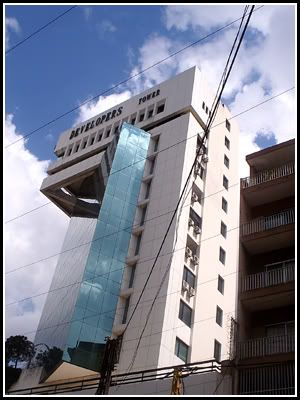
This "Photo Tuesday", I will not be satisfied with a mere caption. I need to rant.
Every now and then, in Lebanon, you stumble upon an oddly named place, an oddly named store, an oddly named building (yup, they name 'regular' buildings here... of course, other than the ingenious "Our place is the 3rd building after Hajj Hassan's uncle's house, third floor, 2nd door"). And now, the "tower" thing seems to be in fashion. Every now and then, a new 6-7 (or 8) story building pops up, and is honored by the term "tower". Today, as I walked around in New Jdeideh, I noticed this "tower", and snapped a shot. I kept wondering what the word "developers" was all about. What is the meaning of "Developers Tower"? Is it some sort of gathering place for developers? But then, the apostrophe is missing at the end, so it couldn't be that. I couldn't help but wonder what all those buildings will serve. There is no shortage of buildings, apartments, office space! On the Rabieh road, there are at least 3 new centres; then there are the older ones that are pretty much out of use, since all the stores that opened there closed down due to lack of business. It seems that every person with some money to waste is now buying a plot and erecting a building -- or tower. I am sitting here in my room, surrounded by 3 -- THREE!! -- construction sites. Apartment buildings, 4 stories high (with some "wasta" you can also add a 5th floor in this 4-story zone). They say there's no money to buy anything, no money for cars, no money for new apartments, but then, where is the money for the construction coming from? These are not isolated phenomena, they are widespread (at least where I live) and are not housing projects by companies, they are individual initiatives. And then there is the issue of the treatment (or rather, abuse) of the laborers, who are mostly Syrians. I once woke up to horrible shrieks and yells, it turned out the owner of the construction site and the engineer were yelling at one of the workers and abusing him physically... Those who whine and continue to cry "there's no money", have the best of luxuries, whereas silence rules over the poor, the exploited, and dispossessed.
I keep wondering, if there is no money, how come I saw at least a 100 brand-new Nissan Tiidas parked in only one tiny "suburb" of Beirut, which claims to be "suffering" (it just can't be that all of the Tiidas belong to "visitors")? And what is worse than the whining and the brand new shiny cars (some quite expensive, topping the $50,000 level) is the condescending attitude towards those who do not have any of these luxuries; for example, towards taxi drivers with oldish cars, who struggle to feed their families, a fact which the poor suffering brand new car owners forget (how convenient). The poor, economically depressed cry-babies turn into abusive monsters when they come across real samples of what they claim to be going through (but aren't in reality). What's worse, sectarianism has plagued this country so much that it seems there are now different standards to judge poverty. A Christian with a yearly salary of $20,000 is considered "poor", whereas a Sunni or Shi'ite with 1/4th of that salary would not even be considered to be anywhere close to being poor. And Iraqi and Palestinian refugees are... not considered at all (except when keeping track of their sectarian "belonging", lest it threaten the "delicate sectarian balance"; batrak Sfeir will demand that we bring some more Christian Iraqi refugees to maintain the 6-6 balance).
Welcome to the world of capitalism and sectarianism... and Lebanon! Enjoy your towers, and don't forget, they (we?) love life...
Oh and, Syria is a hundred times better than Lebanon in almost every respect. Now shut the hell up and get over yourselves.
You demand a tribunal to try the (unknown) killers of Hariri?
I demand a tribunal to try the (known, clear as light of day) killers of 1200 people!!
Labels: class struggle, i love life, lebanon, photos
posted by Angry Anarchist @ 4/03/2007 04:22:00 PM,
,
Photo Monday
Monday, March 19, 2007
 Sunset
posted by Angry Anarchist @ 3/19/2007 05:54:00 PM,
,
The Good, the Bad and ... the Saint
Monday, March 5, 2007
 Lebanese university students' favourite daydreaming themes
This morning:
X: Lebanon will always rise from the ruins and ashes, no matter what. I mean look at what Hariri did.
Me: ... What did he do? ...
X: What do you mean what did he do, he rebuilt Lebanon.
Y: Downtown, hehehe.......
Me: Uh, rebuilt Lebanon? I must've been living on Mars or something?
X: Come on, what would downtown have looked like without him?
Me: And I should care why exactly?
X: Because it attracts people to visit the country!
Me: Walla. Very nice theory. And that actually was worth smashing people's skulls for and vacuuming what little money that was left in their pockets? So you're saying downtown is good for the South Lebanese? Walla, you have a brilliant theory right there.
Z: You know what I think? I think Hariri was one of a kind.
Z1: There's always Sa'ad Hariri.
Z: Yes but no one can fill Rafiq Hariri's shoes.
Me: To be sure...
**
The Bad
This afternoon:
Me: You know, a taxi driver told me the other day that "a Saddam" should rule Lebanon, because that is the only thing that will fix the country.
X: You mean Michel Aoun?
Me: Uh, well, I guess that'd be more like Walid Jumblatt.
Y: Ha ha!! Walid Jumblatt would make a fabulous dictator! Just imagine!
**
The Saint...
This afternoon:
X: But you know, it's not right to say "once a murderer, always a murderer" with regards to Samir Geagea. It just ain't fair.
Me: Oh yes, that's not fair at all. Not fair at all.
X: Yes, because he might have changed.
Me: Yes yes, he might have.
X: Plus, in Lebanon you can't not put things into a historical context. The man was a product of his circumstances.
Me: Yes, that's an ingenious idea, because there is a "historical context" ONLY in Lebanon. But even "if" this "historical context" is not a concept unique to Lebanon, certainly Stalin "could have changed" too. Not to forget our good ol' buddy Hitler. And to be sure they were both products of "their circumstances."
**
I
This afternoon:
X: I want to convert you from leftism.
Me: Uff, now that's some humongous project...
X: Nah it's not too difficult I am sure.
Me: Just some advice, don't waste your time. ;)
Me: Oh, and one more thing, I am not a 'leftist'.
X, Y: What are you?
Me: I'm an anarchist.
Z: So you are a fan of Bakunin?
Me: Actually no, I am not a fan of anyone.
X, Y, Z: ...
Labels: episodes, hariri, lebanon, photos
posted by Angry Anarchist @ 3/05/2007 09:59:00 PM,
,
Photo Saturday
Saturday, March 3, 2007
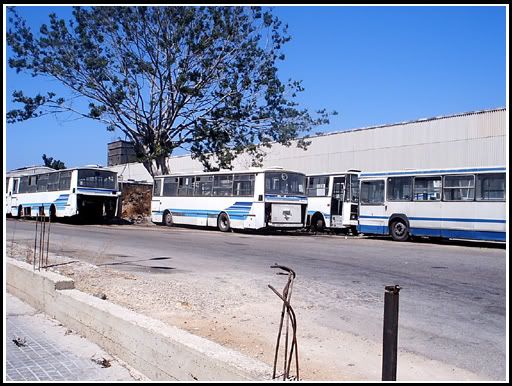
Out of Service Buses in an Out of Service Country
Not that countries serve anyone or anything other than the greed of the power hungry.
posted by Angry Anarchist @ 3/03/2007 12:01:00 AM,
,
Photo Saturday
Saturday, February 24, 2007
 Martian mukhabarat* landing in Beirut to plant bombs
* intelligence agency
posted by Angry Anarchist @ 2/24/2007 12:19:00 AM,
,
Recollections
Thursday, February 22, 2007
 Probably not many of you will be familiar with the location in the photo! This is (was) Cine Vendôme in Mar Mkhael. The long stairs that take ages to climb will lead you up to Ashrafieh. The street pictured above leads to Electricité du Liban. I still remember the specific odors that used to come out of different parts of that long street. I even used to cross the street in some places to avoid the smells. I went back last September and the smells were not the same anymore.
~~
~~
~~
~~
At the gas station there used to be huge line-ups, and people fighting each other about who should fill up first. To avoid the long line-ups we used to take empty water bottles and sneak in between the cars and ask for a fill-up. A kid asking for a gas fill-up. Who could seriously refuse?
Labels: lebanon, photos, recollections, war
posted by Angry Anarchist @ 2/22/2007 12:05:00 AM,
,
Downtown Beirut: A Sense of Disney
Thursday, February 15, 2007
 I urge you to check out the excellent article by Miriam Cooke, titled "Beirut Reborn: The Political Aesthetics of Auto-Destruction," The Yale Journal of Criticism, volume 15, number 2 (2002), 393-424.
She does a brilliant job at discussing the translocation of the war and its memory into downtown Beirut, which has become the center of Hariri's economic terrorism.
She provides a very interesting, innovative (although by no means comprehensive and often innocently (?) ignorant of the real politics and economics of the "reconstruction") analysis and critique of the translocation and transformation of the narrative of the war (or the wish to erase the memory thereof) -- through urban architecture. I will quote some bits and pieces which I have arranged thematically, but I recommend that you read the whole thing to make more sense of what she is trying to convey.
The Narrative
Stories were written to make sense of the chaos, to stand witness and thereby create conditions for the construction of a moral memory. Narrativity, Hayden White writes, is “the impulse to moralize reality, that is, to identify it with the social system that is the source of any morality that we can imagine.” That is why war stories are told and also why their authority has been so policed. Some, like male combatants, will be authorized, others, like female civilians, will not."Mobilized Amnesia"
After 1990, the fiction of morality was even harder to sustain. A tension arose between the need to forget this war, this bad patch in Lebanese history, and the need to remember in order not to repeat. Between forgetting and remembering comes a moment of crisis in representation. Such moments, Donna Haraway writes, can be both numbing and empowering because when “historical narratives are in crisis . . . something powerful—and dangerous—is happening. Figuration is about resetting the stage for possible pasts and futures.” The aftermath of the Lebanese war, stretching from 1990 until today, has produced just such a powerful and dangerous discursive moment that will dictate how the stage can be reset for possible pasts and futures.Political-Economic Power: A Defensive Shield
The survival of this financial artery through the Burj “front,” both in fact and in memory ... complicates the telling of a moral story. It suggests that even in a place that was represented as the epicenter of lethal chaos there was control, and further, that those who made sure their buildings were spared might have other forms of power. These are the details that some want to forget.Engineering Forgetfulness
First of all the extent of the war must be reduced and contained, even as the official war memorial is placed elsewhere. If the Downtown were to be remembered as the place of the war—its front—it would compel attention to that particular place, and it alone, as the site of immorality. With time and in the absence of a counter-narrative, this translocation of the war may succeed despite the fact that it was generally known that the Downtown was merely a stage on which confessional enmities were spectacularized while the real fighting happened elsewhere.Silencing Collective Memories
If all the anarchy can be identified with this one location, it can be made to bear all the history.OGER & Solidere
The key then is to shape that history, transform it so that it will be useful and not continue to harbor unpredictable collective memories.
The first level of destruction after the outbreak of violence was demolition work. Saree Makdisi writes that it is now known that between 1983 and 1992 there were cycles of demolitions in the Downtown, many of them unnecessary. The first demolitions were conducted in 1983 by Rafik Hariri’s engineering company, OGER. The pretext was to clean up the mess to enable reconstruction. The process “involved the destruction of some of the district’s most significant surviving buildings and structures . . . in total disregard for the then-existing (1977) plan for reconstruction, which had specifically called for the rehabilitation of those areas of the city center.” In 1984 fighting flared up again and destruction continued by other means.Two years later, a temporary calm allowed OGER to resume the demolition work they had started in 1983. In 1992, the year Hariri was first elected Prime Minister, the government called for further demolitions."A Sense of Disney"
The visitor to the new Downtown is struck first of all by a sense of Disney, or Epcot. SOLIDERE has created generic Arab Mediterranean facades. [The Master Plan] describes the Saifi and Jmaizi districts, the brand new pastel housing blocks, as “restored Levantine vernacular . . . carefully integrated.” [It] calls Saifi an “urban village” and although construction is clearly new, the Plan vaunts the “large number of existing buildings that have been retained.” The buildings in this formerly working class area resemble their antecedents. But not quite. And it is this “not quite” that is so important because it serves to cloud the memory. The slick lines and surfaces of housing blocks targeting the wealthy middle classes cannot harbor the unpredictable collective memories that lurked in the thick green of the weedchoked Downtown ruins.Profit Without Guilt
SOLIDERE promised a return, a reversion to a pre-war past ... The promised return capitalizes on nostalgia for communal harmony and desire for profit without guilt or memory, in the hope that the repressed will not return."A Land Without a People for a People Without a Land"
SOLIDERE, too, is using the instrumentalities of the civil war to displace it from the country and scattered locations of its capital to the site of the Downtown and then elsewhere. It is erasing its traces by drowning them. SOLIDERE has bulldozed the debris into the sea, and is using the ruins to build a new foundation that no one can claim because the sea does not belong to anyone. According to Edward Said, the new colonizer claims, names, and inhabits the land said to be empty. The occupied land can then appear to be productive of culture. The new Downtown has been made to absorb the history of the war and in the process it has emptied it of meaning.Resisting the Memory of the Forgotten
SOLIDERE’s inflated claims for a glorious history for the Downtown glosses over the war that is finished, and prepares a vision for a brilliant global future that will owe its regeneration to SOLIDERE ... It revives the regional past (Phoenician and Greek) to erase the local past (the war) and to launch this new Beirut into a global future. The war is over. A monument to a conventional (hence, moral) war has been built and installed somewhere in the mountains. The traces will soon be gone. It will no longer matter who was responsible for the war nor why it was fought.
Labels: economics, hariri, lebanon, photos, solidere, war
posted by Angry Anarchist @ 2/15/2007 06:56:00 PM,
,